
Croatia
- Islands, and secluded beaches
- Ancient history and rich, varied culture
- National Parks, and sparkling waters

Travel is changing faster than ever. From quiet anchorages AI will never find to the freedom of staying put, discover how travel is changing in 2027.
Combining customer data with first-hand insights from our travel experts on the ground and tourism boards across Europe, we’ve identified the key travel trends set to shape the year ahead and the European destinations travellers should have on their radar.
Andy Crang, VP of Marketing at Sunsail, said of the predictions: “In 2027, there will be a move from holidays being about how much you can see, to how much you can experience. We’re seeing an increase in Sunsail guests who desire meaningful experiences, greater cultural immersion and long-term connection to the places they visit.
“Our on-the-ground teams and professionals see this first-hand. Guests want to know what’s available to do with real local residents, spend longer in one anchorage and identify quieter, under-the-radar destinations that make their trip feel exclusive and unlike anybody else’s.”
AI is already becoming the starting point for planning a holiday. AI search engines such as ChatGPT can suggest destinations, build itineraries, compare travel times, and surface holiday inspiration based on the information available online.
But there is a fundamental difference between a sailing holiday from a screen and actually sailing it.
The Insight: AI is not a sailor
As more travellers turn to AI for holiday inspiration, there is a risk that the destinations with the biggest digital footprint become the destinations that are recommended most often. For sailing, that can mean overlooking quieter, lesser-known destinations that may not have the volume of online content needed to make them visible to an LLM.
We’re the first to embrace technology that can make travel planning easier, but AI has its limits when it comes to the realities of being on the water.
As our Croatia Base Manager, Mirna, put it: “AI is not a sailor. It can suggest a route based on what it knows, but it doesn’t have the experience of being on the water and understanding how a place can change with the wind, weather, and sea conditions. A route that looks perfect on a screen might not be the right route when you’re actually sailing it. Knowing where to go, when to move on, and which places are worth discovering comes from years of experience. AI can be a useful tool, but it can’t replace the local knowledge you gain from actually sailing these waters.”
An LLM can identify a beautiful anchorage on a map, but it cannot replace the judgement that comes from knowing how that anchorage behaves in different conditions. That local knowledge is particularly important when sailing, where conditions can change quickly and the most rewarding itinerary isn’t always the one that looks best on paper.
The opportunity, therefore, isn’t to choose between AI and human expertise. It’s to use technology for what it does best, while putting real-world sailing knowledge at the heart of the final plan.
The days of equating luxury with five-star resorts and concierge services are fading. For the 2027 traveller, the status symbol has changed. They aren’t looking for crowded pools or high-end dining; they’re looking for privacy, nature, and the kind of restoration you only find when you’re cut off from the noise of the everyday.
The Insight: Why “Regenerative Luxury” is the New Status Symbol
We’re seeing that travellers today are seeking destinations that don’t shout. They want empty anchorages, crystal-clear water, and the silence of a dark sky. They want travel that leaves them restored, not just entertained. This comes as 22% of Sunsail customers want to experience more secluded, less crowded spots.
The Proof
While these ‘destination watchlist’ locations are becoming the new gold standard for travel, they are notoriously difficult to find. They aren’t on standard tourist maps. This is where our local knowledge becomes our greatest asset. Our skippers have been navigating these hidden bays, secret caves, and untouched harbours for years.
Unlike a resort, which stays put, a Sunsail yacht allows for true “Regenerative Luxury.” We aren’t beholden to a schedule. If the wind turns or the tide shifts, we move. We are masters of the changing landscape, ensuring our guests reach these hidden gems exactly when the conditions are perfect.
The travel conversation is changing. For years, the first question people asked when planning a holiday was, “Where are you going?” Today, that question is being replaced by something more specific: “What can we do?”
For the modern traveller, the destination itself has become secondary to the experience. They aren’t looking to tick a country off a map; they are looking for the exact moment where they can engage with wildlife, dive in untouched waters, or learn a local custom.
The Insight: Curation Over Coordinates
We are seeing a definitive shift toward experience-led travel. Our guests are moving away from passive “destination” holidays and toward active, curated memories. Whether it’s stargazing in a dark-sky reserve, snorkelling hidden reefs, or finding the perfect local vineyard, travellers are increasingly prioritising what they can experience as part of their holiday.
The Proof
Our recent customer research supports this experience-first mindset. 60% of our travellers cite discovering and exploring new places as a primary holiday motivator, while 59% are driven by the search for natural scenic beauty.
The message is clear: travellers aren’t simply choosing a destination and then deciding what to do there. Increasingly, they are choosing the experience they want and finding the destination that can deliver it.
For sailing holidays, this shift is particularly relevant. A yacht allows travellers to build their itinerary around the experiences they want – from finding secluded anchorages and hidden swimming spots to discovering local restaurants, wildlife and lesser-known corners of the coastline.
For years, the perfect holiday has been measured by how much you can fit into it. Multiple destinations, packed itineraries and a constant stream of things to see and do have become almost a badge of honour. But in 2027, we expect travellers to start valuing the opposite: doing less, staying longer and permitting themselves to slow down.
The Insight: The Joy of Staying Put
After years of increasingly busy lives, holidays are becoming an opportunity to step away from the pressure to constantly be somewhere or do something. Travellers don’t necessarily want another itinerary to work through; they want the freedom to decide what the day looks like when they wake up.
That might mean spending an entire afternoon anchored in one beautiful bay, lingering over lunch ashore, swimming until sunset, or simply staying put because there’s nowhere else they would rather be.
For sailors, this freedom is built into the experience. Unlike a traditional sightseeing holiday, there is no obligation to move on simply because the itinerary says so. If a destination captures you, you can stay and enjoy it.
The Proof
Our customer data points towards this growing appetite for exploration, nature, and experiences over ticking destinations off a list, as 36% of customers are motivated by natural beauty, whilst 35% say to experience local food, drink & onshore experiences, and 17% would like shorter, more relaxed sailing distances between stops.
And this is where sailing offers a different definition of luxury. The ability to change course, abandon the schedule, and stay somewhere simply because you love it is a privilege in itself.
In 2027, we predict the ultimate status symbol won’t be how many places you managed to visit. It will be having nowhere else you need to be.
A sailing holiday might look the same on the surface, but what travellers want from their time on the water can vary significantly depending on where they come from. Our latest customer data reveals a fascinating difference between UK and US sailors – with one market leaning towards exploration, while the other places greater emphasis on switching off and spending quality time together.
The Insight: The Explorer vs. The Unplugger
For UK travellers, sailing is often about making the most of the opportunity to discover somewhere new. There’s an appetite for exploration – finding hidden anchorages, visiting different islands and building an itinerary around discover.
For US travellers, the emphasis is more firmly on escape. Rather than trying to cover as much ground as possible, the boat becomes a place to disconnect from everyday demands, slow down and spend uninterrupted time with the people they have brought along.
The Data: Different Group Dynamics
That distinction can also be seen in who travellers choose to bring with them.
The UK approach: UK sailors are more likely to travel in smaller, close-knit groups, with 19% of customers travelling in a group size of 2 (vs 8% for the US) and 38% travelling in a group size of 3-4 (vs 22% in the US). This emphasises the desire for a holiday centred around shared exploration and discovery.
The US approach: US bookings show a stronger skew towards larger groups, with 34% of customers travelling in a group size of 5-6 (vs 26% in the UK) and 30% traveling in a group size of 7-8 (vs 14% in the UK), suggesting the yacht is being used as a space to bring family and friends together – creating an opportunity to reconnect away from the distractions of everyday life.
For both, the appeal is the same: the freedom to step away from the usual routine. But what they do with that freedom is where the two markets diverge.
The family holiday is getting bigger, literally. While family travel has traditionally meant a resort hotel, villa or a week away with the immediate family, we’re seeing growing interest in holidays that bring multiple generations and friendship groups together.
For these travellers, the holiday isn’t simply about a change of scenery. It is an opportunity to reconnect, share experiences and spend meaningful time together away from the routines and distractions of everyday life.
The Insight: The Return of the Extended Family Holiday
At Sunsail, our base managers are seeing growing demand for itineraries that work for three generations or more. Parents and grandparents are looking for holidays where everyone can take part, regardless of age – whether that means swimming from the boat, spotting wildlife, paddleboarding, exploring ashore or simply spending time together on deck.
A sailing holiday also offers something increasingly valuable to large groups: shared time without having to organise every minute of it. There is space for different generations to do their own thing, while still coming together for meals, swimming, exploring and evenings on board.
The Proof
Our latest customer data reinforces this shift. 49% of respondents identify a family holiday as their preferred type of yacht charter, highlighting the importance of shared experiences in the sailing holiday market.
FY25 booking data also points towards a changing group dynamic, with mixed groups of family and friends increasing while couple-only bookings decline. And the experiences families are looking for reflect this desire to connect. They aren’t necessarily seeking traditional luxury; they’re looking for the things that allow everyone to participate – easy-access swimming spots, wildlife encounters, paddleboarding, kayaking and destinations that offer something for different generations.
The result is a new kind of family holiday: less about keeping everyone entertained, and more about giving everyone a reason to be together.
As travellers move beyond the traditional European hotspots, we expect 2027 to be the year of the lesser-known destination. The places making our watchlist aren’t necessarily the ones dominating social feeds or topping the tourist maps; they are the destinations offering something harder to find – untouched nature, authentic food and wine, dark skies, local culture and the freedom to experience somewhere at a slower pace.
Our destination predictions are informed by customer booking behaviour, first-hand knowledge from our skippers and local teams, and insights from tourism partners on the ground. Together, these point towards a new generation of European destinations where the experience is the reason to go.
“The most memorable places aren’t always the ones everyone knows about. When you’re sailing, you have the freedom to go beyond the obvious destinations and discover somewhere because of how it feels, rather than how many people have posted about it. That’s where you find the really special experiences – the quiet anchorage, the family-run taverna, the bay you have almost entirely to yourself.”
– Mirna, Croatia Base Manager
A protected nature park, Lastovo is the Rising Star of South Dalmatia with exceptional dark skies perfect for stargazing, and beautiful conditions and surroundings for snorkelling and diving enthusiasts.
Also a national park in southern Croatia, Mljet offers a slower, nature-led alternative to busier hotspots. Visitors can admire the epic views of the saltwater lakes, which can be found on the hiking and cycling trails and kayaking opportunities.
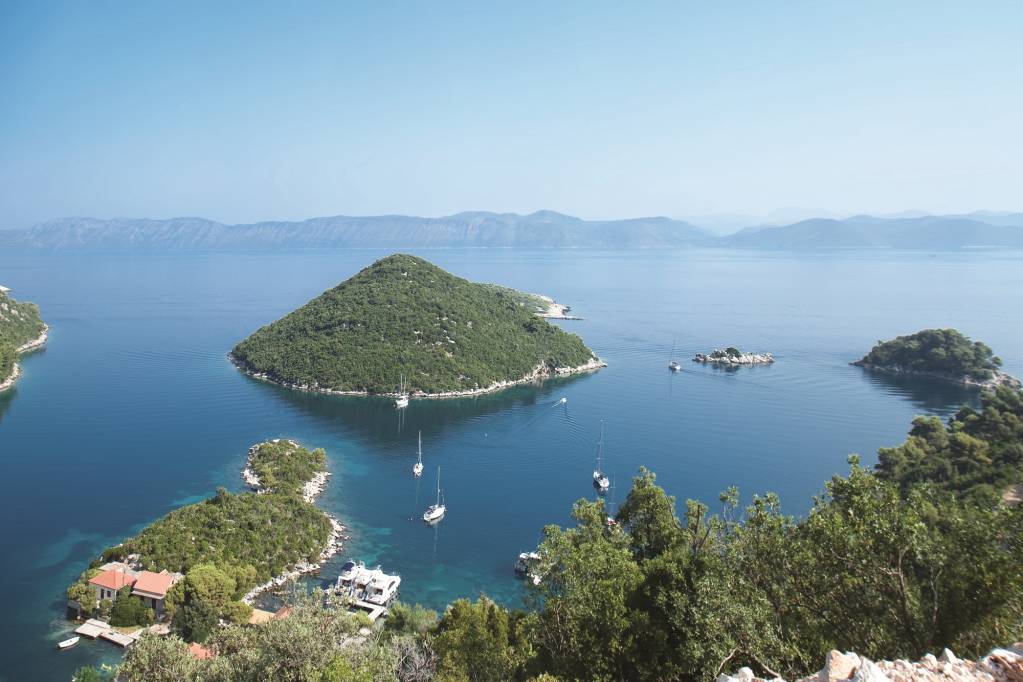
A mountainous island covered in thick pine forests, Kalamos’ natural beauty and peaceful atmosphere give it a luxurious feel. For added adventure, explore the protected harbours and fascinating sea caves.

The islands are either car-free or allow limited local vehicles, which adds to the tranquil environment. Surrounded by luxurious swimming bays, it’s suited to travellers seeking a quiet luxury that prioritises a slower pace for their trip.

A hive of authentic Croatian cuisine, visitors to Korčula can soak up the bustling foodie scene and wineries that make this one of Croatia’s highlights.

Oysters are a must when visiting the Pelješac Peninsula, which is also a leading region for red wine production. Packed with farm-to-table experiences, it brings the best of Croatian cuisine to the forefront.
The perfect place to enjoy a unique experience for wine lovers: visit the local winemaker who has a tasting room beneath sea level, with dramatic views looking out towards the sea.

Become immersed in the local architecture and admire the buildings made from nearby marble, which has been crafted on the island for centuries.

For history lovers and sightseeing enthusiasts, Papanikolis Cave was used as a hideout by Greek submarines during WWII. The caves are only accessible by boat and are located in the southwest of the island, extending 120 metres into the rock.



Start your experience with Sunsail on land and sign up to receive e-mails from us about yachts, offers and destinations.
By clicking 'Sign up' you confirm that you have read and understood our Privacy Policy and consent to our use of your information.


